Layering necklaces can look effortless, but the balance is rarely accidental. A round pendant changes the arrangement because it adds a defined center, a stronger surface area, and a symbolic image that naturally draws the eye. For a style guide reader comparing a buddha pendant necklace for stacking with simpler gold chains, the useful question is not how many necklaces can fit together. It is how the pendant, chain weight, spacing, and visual focus interact without turning the stack into visual noise.
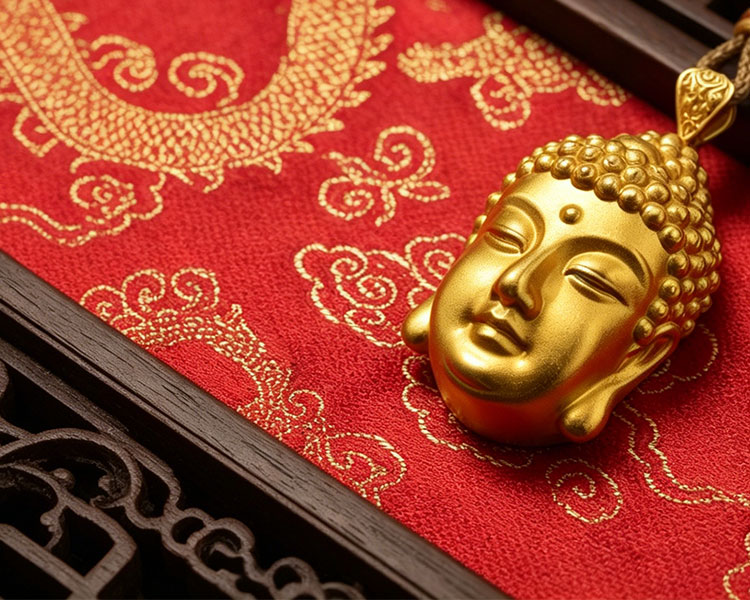
A medallion pendant behaves differently from a slim bar, tiny charm, or plain chain because it has a contained circular field. That field works almost like a frame: it gathers the engraved figure, reflective surface, and outer edge into one readable shape. In a buddha pendant necklace, the Buddha image adds another layer of focus because the viewer is not only seeing metal and shine. They are also seeing a figure with symbolic and decorative meaning. Jewellery has long carried aesthetic, social, and personal expression, and that broader history helps explain why a pendant can feel more important than the chain that holds it. The eye usually settles where shape, image, and contrast are most concentrated. This is why stacking starts with visual gravity rather than quantity. A round medallion creates a lower or central anchor depending on where it sits, while nearby chains act as supporting lines. If those chains are too visually busy, they can interrupt the pendant's role. If they are too faint, they may disappear and leave the pendant looking isolated rather than layered. A buddha pendant necklace for sale may look compact in a single product image, but when imagined as part of a stack, the circular pendant needs enough visual space to remain legible. This does not create a fixed chain length formula, especially when chain length and pendant diameter are not confirmed. The better method is to read the relationship between a strong center and the lighter lines around it. A medallion is not merely another object in the stack. It can organize the whole arrangement because its round outline, reflective face, and central image make it easier for the viewer to understand where the styling begins.
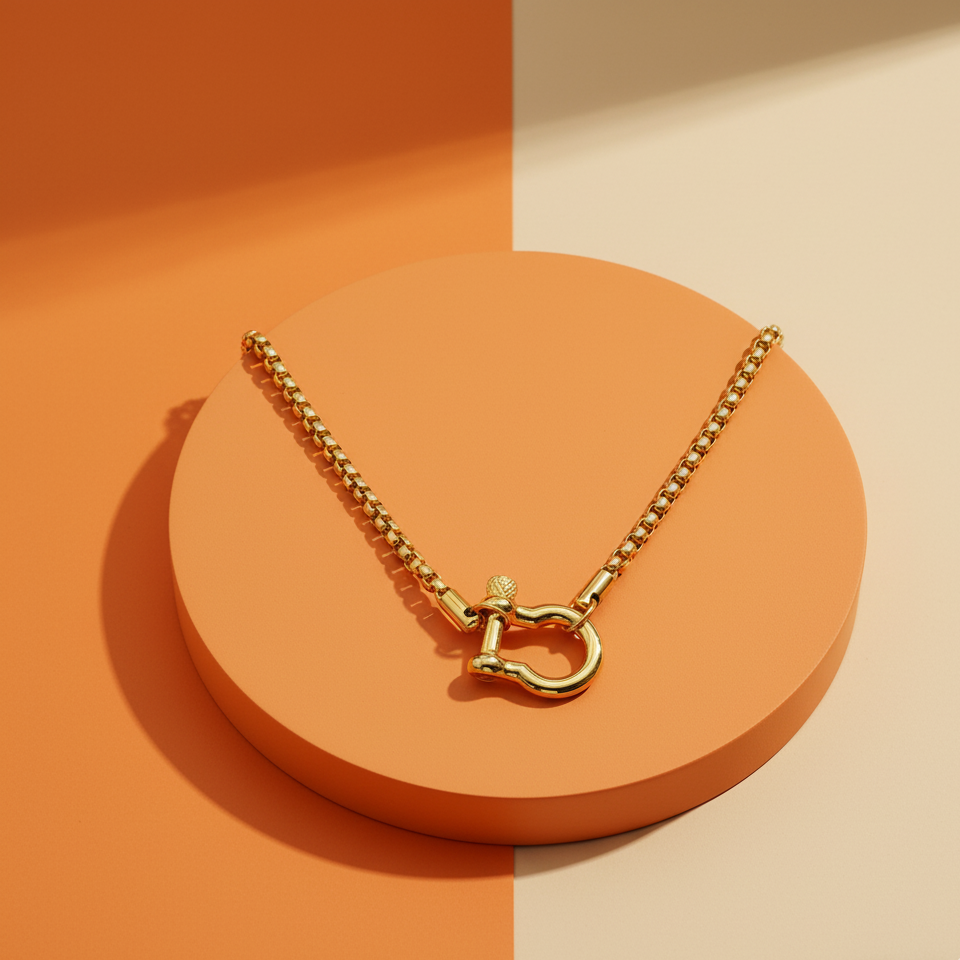
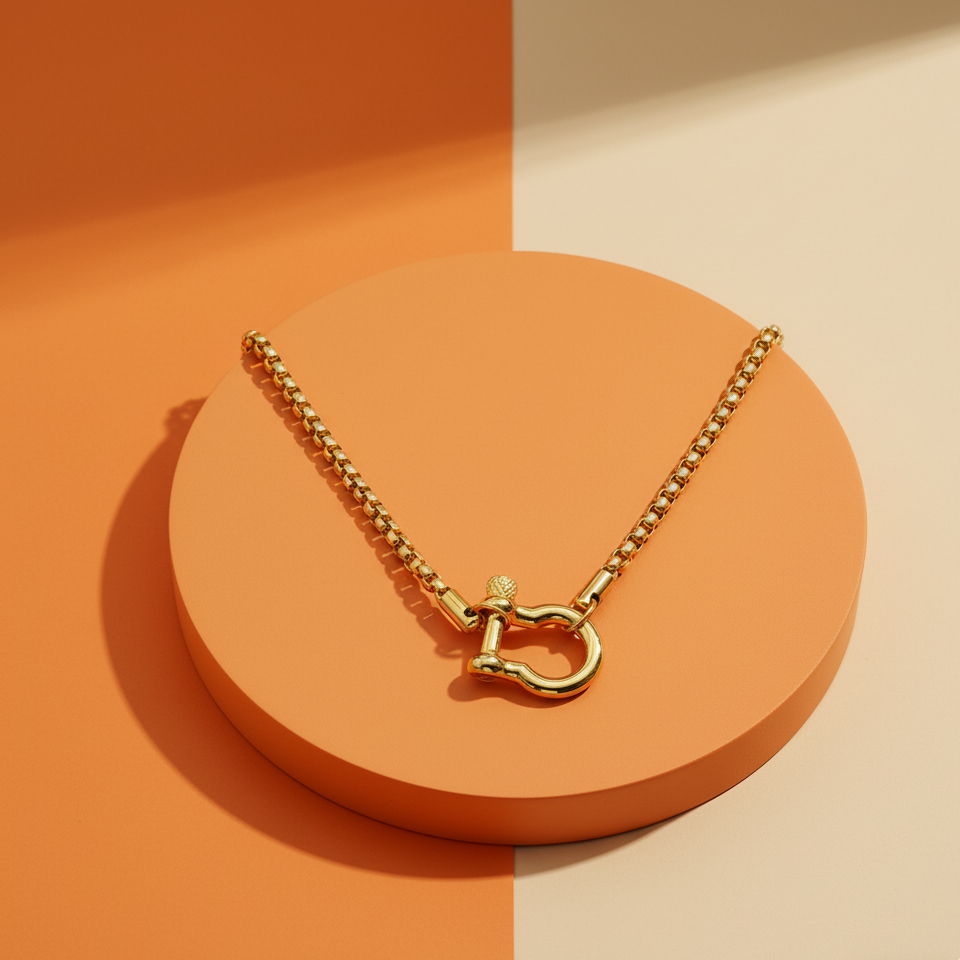
A gold buddha necklace can sit naturally beside simple gold chains because both elements share a warm metallic tone while playing different visual roles. The pendant brings surface area and symbolic imagery. The plain chains bring rhythm, shine, and spacing. If everything in the stack has equal thickness, equal shine, and equal detail, the viewer has no obvious starting point. If one medallion carries the clearest image while the other chains remain simpler, the arrangement becomes easier to read. This is why minimal raw gold chains often support a medallion better than several ornate pendants of similar size.
Clear visual space does not necessarily mean empty skin or a perfectly separated chain length. It means the round pendant should not be crowded by another dominant pendant, oversized clasp, or heavy decorative chain sitting directly against it. A medallion shape already has edge, volume, reflection, and image detail, so the surrounding area needs enough calm for the center to breathe. In stacking terms, the pendant can still appear with leather jackets, monochrome hoodies, or streetwear textures, but the necklace arrangement itself should avoid making every element equally loud. This is a balance judgment, not a universal styling rule.
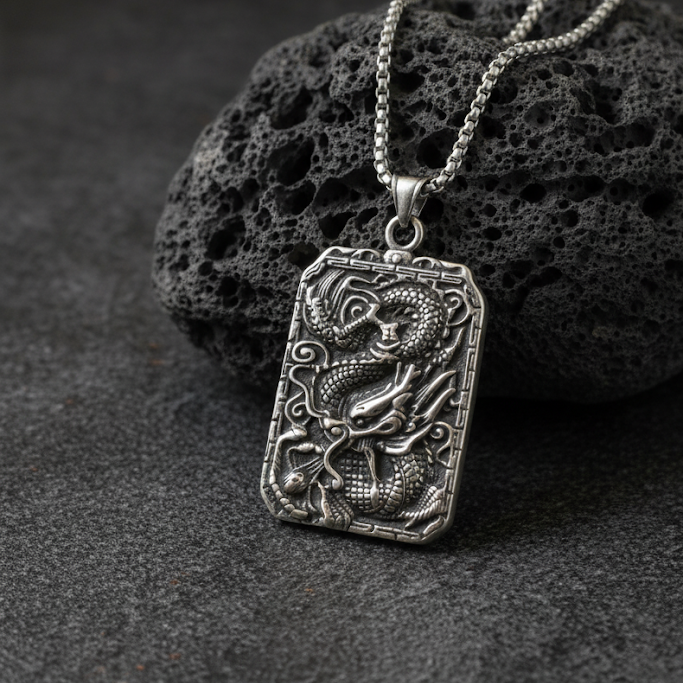
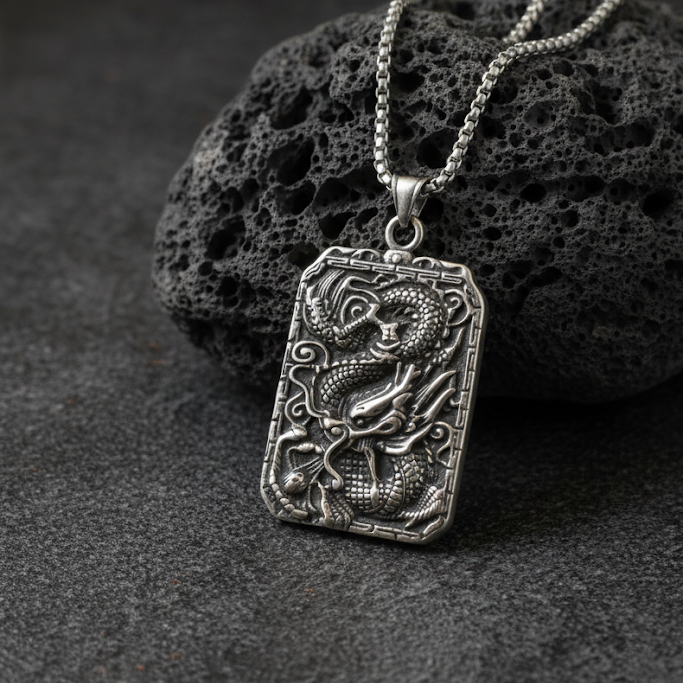
Supporting chains work best when they create lines that lead toward or around the medallion. A fine chain above can make the pendant feel grounded. A slightly chunkier chain nearby can add street-style weight. A smooth gold chain can echo the pendant finish without adding another pictorial focal point. Chunky industrial links can still work, but only if they are treated as texture rather than a second centerpiece. The visual question is simple: when someone looks at the stack, do they first notice the Buddha medallion, or do they struggle to decide which chain matters most? This comparison also explains why a gold Buddha necklace for sale should not be evaluated only by the word “gold.” In a stacking discussion, gold is a color and surface signal before it is a material conclusion. A golden finish can create warmth, reflection, and visual continuity with other gold-tone chains, but that does not confirm solid gold content or a precise metal composition. For layering balance, the relevant point is how the golden surface behaves visually beside simpler chains and darker clothing. The same pendant may feel bolder with a black hoodie, warmer with a neutral knit, or sharper against a leather jacket, but those are visual readings rather than fixed outfit instructions.
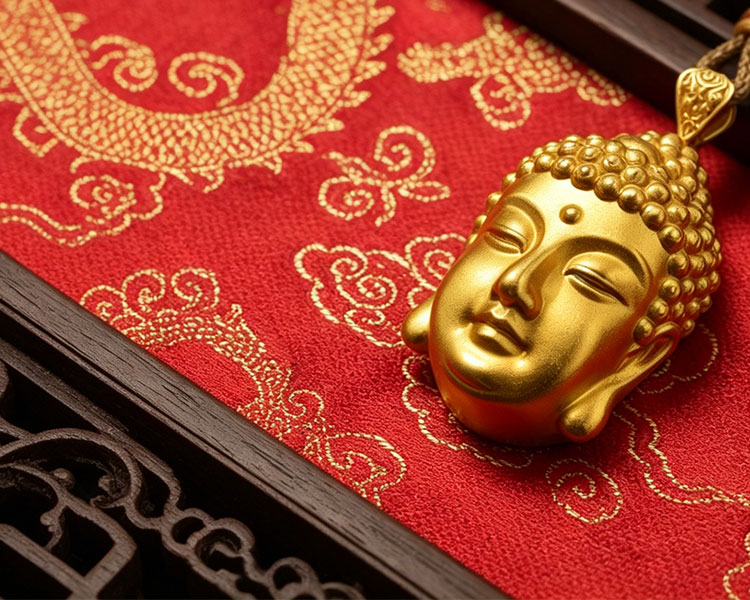
The Lumieresllc Laughing Buddha Necklace is a useful example because its visible concept centers on a gold medallion with a high-relief Laughing Buddha engraving, a golden finish, and a street stack styling vocabulary. Its styling language points to minimal raw gold chains, chunky industrial links, dark leather jackets, casual monochrome hoodies, and high-street stacking. Those details support a layering discussion because they place the pendant in a style environment where metal shine, streetwear texture, and symbolic imagery can appear together. They do not confirm a precise chain length, pendant diameter, pendant weight, chain gauge, or ideal stacking ratio. The high-relief Buddha engraving matters because relief adds shadow and depth, making the image stronger than a flat disc with a faint mark. The golden finish and mirror-like metallic reflection can make the round face more noticeable under light, while a lightweight construction claim suggests the piece is presented as wearable rather than purely decorative. Still, “lightweight” can feel different from one wearer to another, and the absence of confirmed dimensions means a reader should treat the necklace as a visual reference rather than a measured stacking template. If someone is browsing a laughing buddha necklace for sale, necklace online, or buddha jewelry online, this kind of example helps them understand the styling intention before they assume exact proportions. The useful takeaway is that a medallion stack works when the pendant is allowed to lead. Lumieresllc's gold medallion example supports that idea by pairing a strong Buddha image with chains and clothing references that can frame it. A simple gold chain can repeat the metallic tone, while a thicker link can add contrast if it does not overpower the medallion. Dark clothing can sharpen the outline; monochrome styling can reduce distraction. These are not daily-wear rules, material verification steps, or a complete outfit tutorial. They are comparison notes for seeing why a round Buddha pendant can act as the main visual point in a layered necklace arrangement. For readers comparing a buddha pendant necklace for sale with other pendant styles, the most useful distinction is between “stackable” and “background.” A slim chain may be stackable because it disappears into the arrangement. A medallion is stackable because it organizes the arrangement. Basic jewellery care still matters, since layered chains can rub against one another during wear and storage, but care advice should remain separate from the visual question of balance. The style point is about clarity; the care point is about preserving the pieces.
A Buddha pendant necklace can work well in stacking because the medallion shape naturally creates a visual center. The strongest layered looks usually let simple chains frame the pendant instead of competing with its round outline, golden surface, and Buddha image. A gold buddha necklace does not need a rigid styling formula to be understandable; it needs clear hierarchy. Readers interested in Lumieresllc can view the Laughing Buddha Necklace as an example of a gold medallion placed in a high-street stacking setting, while keeping unlisted details such as chain length, pendant size, and weight separate from the broader visual idea.
Q:Can a Buddha pendant necklace be layered with simple gold chains?
A:Yes. A Buddha pendant necklace can be layered with simple gold chains when the plain chains support the pendant instead of competing with it. The medallion should remain the clearest visual center, while the other chains add shine, spacing, and line movement around it.
Q:Why does a medallion shape become the visual center in necklace stacking?
A:A medallion shape becomes the visual center because it has a defined round outline, a larger visible surface, and often an image or engraving inside it. Those features concentrate attention more strongly than a plain chain, so the eye naturally lands on the pendant first.
Q:Does a gold Buddha necklace need a confirmed chain length for basic layering ideas?
A:A confirmed chain length is helpful for exact styling, but it is not required for understanding basic layering balance. Even without precise measurements, readers can still evaluate whether the medallion should lead the stack and whether simpler chains should frame it.
International Gem Society Jewelry Care